COMMITTEES
general assemblies
General Assembly (GA) Committees function similar to the United Nations General Assembly, with each delegate representing an individual nation. Delegates work together over the course of the conference to pass non-binding resolutions to the topic outlined in the background guide.*
*Note: Writing a position paper is required for the General Assemblies. Papers are due Monday, April 6th. You can find rubrics and submission guidelines in the ‘Conference Policies’ tab of this site.
Economic & Financial Committee (ECOFIN)

TOPIC: Regulating the Global Flow of Cryptocurrency
FORMAT: Double Delegation General Assembly
The Economic & Financial Committee (Second Committee) within the UN is most known for its work relating to economic development, growth, and macroeconomic policy. This committee is currently in its 79th session, and works towards the UN’s Sustainable Development Goals (SDGs) using an economic perspective. For this special session of the second committee, delegates will convene to deliberate on an economic problem destroying trillions of dollars of value and a cause for recessions worldwide: corporate fraud. This committee will focus on famous examples of Enron, WorldCom, and Lehman Brothers, along with fraud in developing nations stunting significant growth. Despite rushed reactionary legislation addressing each fraud, scandals continue to proliferate. FTX and Theranos remain a prime example of this. Delegates will work together to solve the root causes of corporate fraud rather than the band-aid measures we have seen in the past like Sarbanes-Oxley and Dodd-Frank. This committee is recommended for high school delegates interested in learning more economics and finance, along with those with prior experience with MUN conferences.
CHAIR: Krish Malhotra '28
Disarmament and International Security Committee (DISEC)
TOPIC: Missile Security, Accidental Launches, and Regional Stability
FORMAT: Single Delegation General Assembly
Welcome to the Disarmament and International Security Committee (DISEC) Special Session on the Militarization of Space. Also referred to as the First Committee, DISEC was created in 1945 to tackle security issues and reinstate peace in a post-World War II world. A committee as complex as the issues that its delegates debate, DISEC has evolved alongside the emerging technologies that threaten global stability and order. Today, DISEC is tasked with addressing one of the most pressing challenges in international relations: the use of outer space for military purposes. As humanity pushes further into the cosmos, the lines between peaceful exploration and military ambition blur, raising critical questions about security, governance, and the very nature of conflict in the final frontier. Systems that are critical to global economies and daily life are being threatened, and it is your mission to find a way to stop it.
CHAIR: Lily Ye '29
World Health Organization (Novice Committee)
TOPIC: Strengthening Global Preparedness for Neurodegenerative Diseases (Novice)
FORMAT: Single Delegation General Assembly
Since the birth of the United Nations, the World Health Organization (WHO) has existed as an agency whose aim is to connect nations, partners, and people to promote health around the world. This mission has been executed in a multitude of ways, from health awareness campaigns, access to disease prevention and treatment, and workforce training for health workers. With accelerating global health crises, there is increasing reliance on innovations and new ways of thinking with regard to health and medical systems. This session will challenge delegates to move beyond technological optimism and critically evaluate the challenges of equitable and widespread treatment and prevention of neurodegenerative diseases. This committee is ideal for high school delegates interested in healthcare policy and technology.
CHAIR: Nour Qarmout '29
CRISIS COMMITTEES
Crisis Committees are the smallest committees by number of delegates, and require flexibility, quick thinking, and immense creativity. Crisis Committees can simulate anything from the colonization of Mars 50 years in the future to the Taiping Rebellion in the 1800's. Here, delegates will represent an individual character, and must be ready to respond to changing events, which take the form of "crisis updates." Instead of passing a resolution, delegates pass both individual and joint directives in order to respond to current updates, as well as the general issue of the committee at large.
BACKGROUND GUIDES COMING SOON
The Sith Council

The Louvre Board of Directors: Crisis at the World's Most Visited Museum (2025)

The Plague: 1300s Florence
FORMAT: Single Delegation Crisis Committee
The Louvre is both the world’s most visited museum and a national institution of the French state. Although it operates with institutional autonomy, its main goal is to serve the public interest and remains subject to government oversight. The Louvre Board of Directors functions as the museum’s primary governing body, and is held responsible for the institution’s long term finances, risk oversight, and public facing accountability. The Board is not in charge of the museum’s daily operations, as these responsibilities fall to the President-Director, Laurence des Cars, who oversees staff and policy implementations. In contrast, the board evaluates holistic institutional performance, approves major financial and security decisions, and is the face of bearing responsibility when a systematic failure does occur. During these periods of crisis, the Board is responsible for central decision-making and in charge of protecting the institution’s stability and credibility.
CHAIR: Uma Bastodkar '29
FORMAT: Single Delegation Crisis Committee
The Star Wars franchise was initially created by film maker George Lucas, airing in theatres in May of 1977 with the first of the original trilogy: A New Hope. Lucas’ science fiction world is made of millions of planets, species and political systems, ultimately portraying the continual struggle of power between governments, movements and individuals. Here, many characters wield a special power, where physical energy, called the Force, grants them extraordinary abilities. Thus, this galaxy is heavily influenced by the two main opposing Force traditions and their users. On one side, stand the Jedi, who seek to embody restraint, balance and peace. And the Sith, the rival faction, instead embrace ambition, emotion and the overall pursuit of power. Yet, despite both groups drawing from the same Force, their ideologies and goals set them in direct and constant conflict with one another. This committee is set in Lucas’s galaxy where control is the main tool of governance, power is frequently disputed, and people who hold immense influence impact the planetary systems themselves. The aftermath of the Battle of Hoth leaves the Galactic Empire outwardly victorious but internally extremely unstable. Each council member not only comes with their own impressive resources but also their own personal goals, some seek to help preserve the Empire while others aim to replace Vader and a select few dream of overthrowing both Sith rulers entirely and taking their place.
CHAIR: Emily Turcios ‘28
FORMAT: Single Delegation Crisis Committee
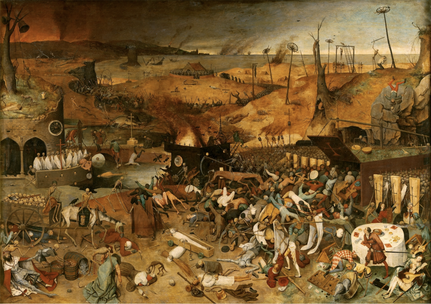
The bubonic plague, also known as the Black Death, was one of the most devastating pandemics in human history. It swept across Europe in the 14th century, killing as many as 25 million people, half of the continent’s population at the time. During this time, Florence was a city of immense wealth, artistic innovation, and economic power. However, the city faced an existential threat with the introduction of the plague, which pushed it to near-total societal collapse. Leaders were forced to confront the fragility of their economy, the limitations of their scientific knowledge, and the terrifying breakdown of law and order. Florence had a relatively decentralized government at the time, and was governed by a series of councils. The delegates of this committee represent a fictional emergency committee convened to fight for the survival of Florence amidst the plague. You will step into the roles of the city’s most influential figures, including powerful banking figureheads, religious authorities, scientists, and political leaders. You will face a series of challenging choices. You must implement public health measures to stem the spread of the plague, restore civil order, and uphold the religious foundations of the city. You must also balance the clashing interests of the elite and common citizens as rival factions battle for political control.
CHAIR: Keith Maben '28